Showing posts with label description. Show all posts

Tuesday, October 22, 2013

Pictures and words

There’s a reason why they say that a picture is worth a thousand words. I’ve found that using visual art is a great way to launch a conversation, inspire writing, and teach analytical thinking. 

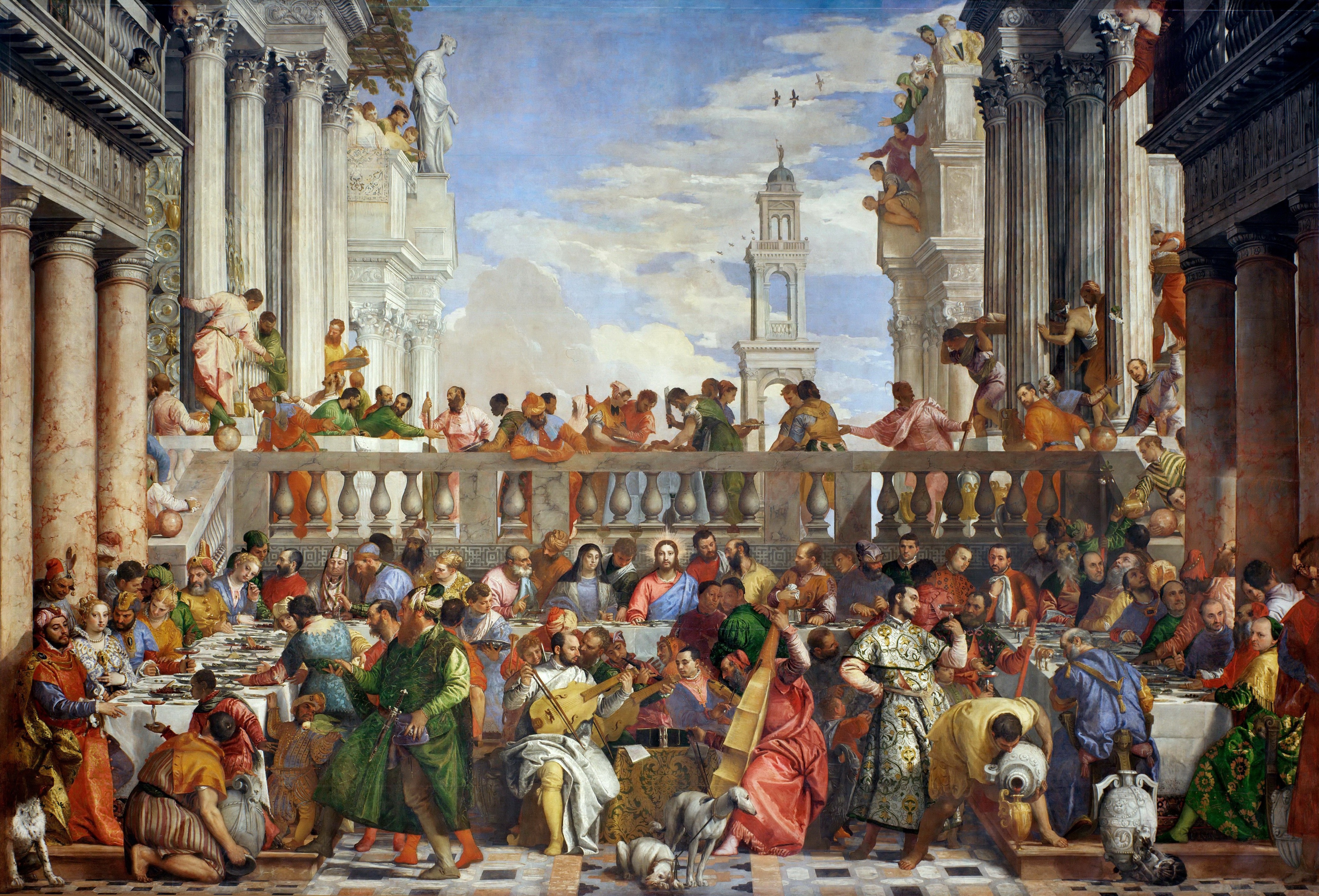
Find a photograph or painting with a lot going on in the way of action and/or facial expressions. National Geographic has tons of great photos to download and print, or just to look at. Art books are nice (you can get them at the library) if you want something bigger.

Here are some pieces that I like:
Bruegel the Elder: The Dutch Proverbs

I ended up sticking with Western art simply because that’s what I’ve been able to find the most of. There are plenty of very cool Asian, Native American, South American and African art pieces with lots of detail and action, but it seems that expressive crowd scenes with high pixelation are the domain of European artists. Haven’t given up, though. Also, here's where art books from the library come in handy. Yay, libraries.

Veronese's Wedding at Cana. Thanks, Wikipedia.

There’s so much you can do. Here are a few ideas to start with:
  • Take turns describing what you see: observe details like colors, textures, light and shade, in addition to what is actually happening. 
  • Make up a title (best if you don’t show your student the title first). Make up titles for different parts of the scene if there is a lot going on. 
  • If you want, you can play a grammar game: list the verbs you see happening. List the nouns, and then the adjectives that describe them. List the adverbs. 
  • Describe imagined details: sounds, smells, sensations, tastes.
  • Make up a story about one person, about the whole scene...pick one interaction and tell what has happened just before the moment in the painting, and what will happen in the next moment(s). 


More on what to do with art coming soon.

Sunday, July 7, 2013

Fashion policery, imagery and vocabulary

I was indulging in a little HuffPo fluff reading about celebrity red carpet fashion (fashion risks: success or stumble?) when Tai snuck up behind me and said, "What's that?" So I explained the concept to him and he stood beside me as I clicked through a few slides.

About this one he said, "She looks like a milkmaid going a-Maying."

Courtesy of Huffington Post

That's one sleek and sexy milkmaid (HuffPo called this one a Success), but I get his point and I love that he said "a-Maying". Where did that come from? How many times can he possibly have heard or read that term?

You'd think that playing celebrity red carpet fashion police would be a very girly-girl thing to do, but both of my boys loved it. They had something to say about everyone:

That dress looks like her pants are falling down.


She looks like a criminal. 
(Sorry, Beyonce fans. Wondering if it's the skin tone, stripes, or shades. Hope I'm not raising a racist.)


That's just...weird.


So I'm hatching an idea that involves finding slideshows like this--they're everywhere on the web--and writing comments about each slide. We work on refining the imagery and similes, and go for really apt description. This will be a do-it-together activity so we can be funny and snarky together (who can come up with the most creative critique or the spot-on-est description?), maybe with a pint of ice cream or a bowl of popcorn. Probably the fashion blunder photos will provide the best fodder. As always, we'll need to start with a couple of good model sentences.

If celebrity fashion doesn't appeal, I'm sure there are variations: tricked-out cars or bikes, home decorating disasters, bad hair, hats.

I'll try it this week and report back.


Monday, June 3, 2013

Nature Observation and Description: Crash and Burn

Well, it's my own fault for not having planned carefully.

An evening expedition to the field overlooking the valley turned out well. The boys were well fed and excited to be going to Rancho instead of bed at bedtime. The light was beautiful, we saw deer on the path right away, and I had brought the laptop for Tai to type on. He went to town, figuratively speaking.

A morning observation was kind of disastrous. It was cold, we didn't have the laptop, he started complaining and I started nagging, and the project started to fall apart. One observation too many, maybe.

Then came revision. My mistake: I had only said observe and describe. I didn't suggest anything specific: look for colors and textures, note what's in the fore, middle, and background, notice how the light changes, notice what's the same and what's different at different times of day.

The original purpose was just that: observe and describe using sensory detail, metaphor, and live verbs. It wasn't (originally) going to be about accuracy, about making a point about how the same place is different at different times of day, about how the place makes a person feel, or about noticing how the quality of light affects a landscape. Those were layers that I added afterwards, and for which I had not prepared Tai.

So when I asked Tai to revise for these things, he balked. He balked for more personal reasons, too, but on a pedagogical level, it was my bad for not laying enough groundwork.

Nevertheless, the resulting three paragraphs with some sentences combined aren't bad. I was hoping for a sort of conclusion, but we may have to abandon ship before we get there.

So here's a better version of what we did:

Before Writing:
Do a couple of observation/sentence exercises.

Play with metaphors and similes.

Talk about how a place can be different at different times of day; how the feel of a place changes and what might cause those changes. Talk about favorite times of day. Plan to visit a place at three different times to observe and record how it changes. Look at paintings or photos that show such changes, note the similarities and differences, colors, imagined sounds, etc. Monet's haystacks are a good place to start. Notice light, shadow, level of activity. Talk about how things "feel".

Go Write
Your writer will write two or maybe three paragraphs about a place at different times of day. They can also write an additional "meta" paragraph--a paragraph about their paragraphs (or a conclusion, if you will). They should know this in advance. The goal is to convey "what a place is like" in two or three different states by showing (with specific sensory details and live verbs) what changes and what remains constant.

Pick a place (or have one ready) and take a field trip. Have prepared a list or a chart, if you think it will help: sounds, colors, textures, background, foreground, etc. With sounds, especially, it might be fun to note what's dominant and what's almost inaudible--this often changes dramatically.

Write. Your writer can make lists, fill in a chart, write paragraphs, whatever works. Tai made a list of sentences. Suggest that your writer to close his eyes to listen and smell. Encourage him to reach for a metaphor. Bring a camera and take photos or video.

Return to this place and do the same thing. Note what changes and what stays the same. Maybe after the second/third observation, use a highlighter to show what has changed.

Pick favorite sentences and observations. If there are no metaphors or similes, see if you can make one observation into one.  Congratulate yourselves on a job well done.

Draft
If your writer has written a list or a chart, now is the time to make those into paragraphs. Later this week, I'll post an idea about how to make this easier.

A general observation can help give shape to the paragraphs--make them more than a list of observations. For example, how does the place make the writer feel? Which time is the writer's favorite?

Revise
With the goal of sensory details, showing change, and possibly conveying "feel" in mind, have your writer go through the paragraphs or notes and decide if anything needs to be added, or could be dropped or changed.

Do a sentence combining exercise. See if that works with anything your writer has.

Maybe add an opening sentence in the front to locate your writer/reader: How did your writer arrive here? Where is this place? Where is your writer standing/sitting? What time of day it it?

Send the draft to a trusted reader who will ask questions and offer specific props, and not just praise your writer to the skies.

Make changes so that the piece will answer the questions, if you think the questions are good ones.

A closing paragraph, if you want one, can address what the writer likes/hates about the place, an observation about the nature of change (kind of sophisticated for an elementary school age kid, tough), an opinion about the project...something that answers the question, So What?

Publish
If you visited a park, try sending the piece to the parks department or to the city or whatever organization maintains the park.

Or your local newspaper?

A blog is an obvious choice if you have one.

Choose photos to accompany the piece, choose a cool font, arrange it all beautifully, and print and send it to a relative or friend.

Put it in your family nature journal.


Sunday, May 19, 2013

More observation: Drafting a descriptive paragraph

Nature writing has a long, proud tradition in America. Think Lewis and Clark, Henry David Thoreau, John Muir, Rachel Carson, and Annie Dillard, among others. I thought we'd give it a little try. My hope is to send a finished piece to friends and family, and possibly to a nature writing website. As for purpose, there's no practical purpose beyond entertaining the audience and getting outside to observe and write. But that seems to be enough, at least for now.

Before writing
I wrote a model of a descriptive paragraph about our backyard. There are lots of great models out there in books and magazines (ooh, a travel mag piece would be fun), but I wanted to keep the ideal within reach--too beautiful or complex and my writer would be intimidated.


Thursday, May 9, 2013

An Observation and Description Exercise

A Little Background
I've done this exercise with Tai a couple of times as a meditiation exercise (also see the end of this post) and as a thinking exercise (about which more in a later post), both orally, and a couple of times as a journal entry. The journal exercise went like this: Write down every thing you see. Note colors, numbers, etc. With some noodging, the results look like this:

I see a computer in front of me.
I see a brown table.
I see a crimson chair.
I see a bumpy red wall.
I see a white window sill.
I see a red plum tree.
I see a green tree with long leaves.
I see a chair to the left of me.
I see a 4 by 4 carpet.
I see a leather chair with cat scratch marks.
I see a placemat with the alphabet on it.
I see a door. A white door.
I see 4 tomato plants.
(9/6/2012)

What I Did
Today I tried again, this time calling it unimaginitively “description practice”. I was going to find a photograph for him to describe, but we've been doing so much with the photos. I wanted something “in real life,” as Kenzo likes to say. So I picked this vase of roses:


If at First You Don't Succeed, or Before Writing
Let's just practice, I said. We'll talk about it first. Tell me what you see—every detail. He was not happy about this, and heaving a grumpy sigh, he said, “They're white.”

“White? Just white?”

“Yes, of course. Duh.”

Not a good start.

He could not or would not do better than “white.” I bit my tongue and didn't push it (slowly getting better at this). “Okay. What else?”

Tuesday, May 7, 2013

Quote of the Week: Stephen King

Good description is a learned skill, one of the prime reasons why you cannot succeed unless you read a lot and write a lot. It’s not just a question of how-to, you see; it’s also a question of how much to. Reading will help you answer how much, and only reams of writing will help you with the how. You can learn only by doing.
--Stephen King